Are you debating whether a downtown Elgin condo with deeded parking is worth the premium, or if a leased space will do the job? In a city where winters bite and garages fill fast, your parking choice can shape daily convenience, financing, and future resale. You want clarity before you write an offer. This guide explains how deeded, assigned, and leased parking work in downtown Elgin high-rises, what each means for cost and marketability, and the due diligence steps that protect you. Let’s dive in.
Parking types explained
Deeded parking
Deeded parking is conveyed as part of your real estate interest and appears on the deed or as a recorded limited common element tied to your unit. In practice, you own it like you own the condo. That makes it easier to transfer and finance when you sell.
- Pros: strongest ownership rights, good resale appeal, long-term control.
- Cons: higher up-front cost, may affect assessed value, still subject to HOA rules and maintenance assessments.
Assigned parking
Assigned spaces are reserved for your unit by the condo declaration or HOA rules. They may be listed as a limited common element without a separate deed. For everyday use, it functions a lot like deeded, with important legal differences.
- Pros: a defined space typically included with the unit.
- Cons: permanence depends on the declaration and HOA practices, so you need to confirm if the assignment is permanent or revocable.
Leased parking
Leased spaces are rented monthly or annually, either from the association or a third-party operator. This is a license or personal property right, not part of your real estate title.
- Pros: lower up-front cost and flexibility if you do not always need a car.
- Cons: monthly fees can rise, leases can change or end, and it may limit loan options for some buyers.
Valet parking
Some buildings provide valet service themselves or through a third-party operator. It is convenient, especially in bad weather, and can be billed monthly or per use.
- Pros: high convenience, efficient use of garage space.
- Cons: higher cost and reliance on an operator’s staffing and insurance.
Tandem parking
Tandem spaces hold two cars parked one behind the other. You or a neighbor will need to move a car to let the other out.
- Pros: often cheaper than two separate spaces.
- Cons: less convenient, can create coordination issues, narrower buyer appeal.
Other features to note
- Guest parking: availability varies and can matter if you entertain.
- Size limits: some garages restrict height or require compact vehicles.
- EV charging: policies differ. You may see owner-installed chargers, common-area stations, or pay-to-use options, often with HOA approval.
What it means in Downtown Elgin
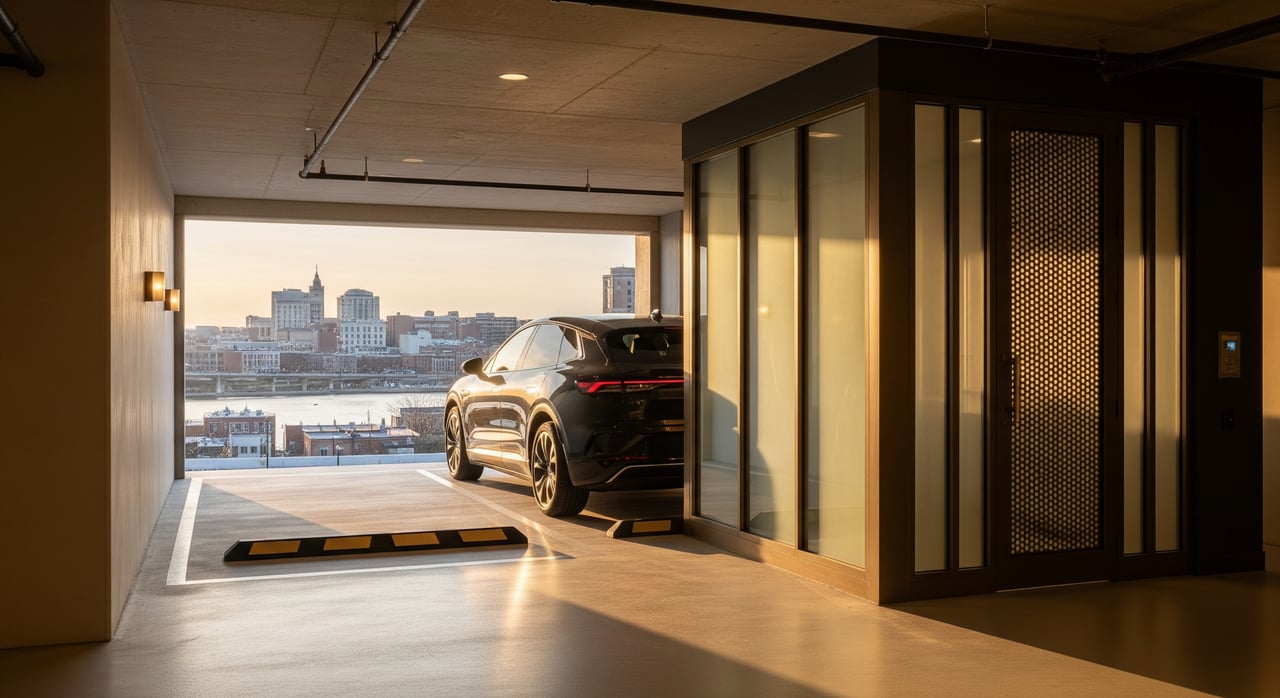
Downtown Elgin blends historic conversions with newer mixed-use buildings. That creates a mix of parking structures, rules, and supply. Proximity to Metra and downtown services can reduce some buyers’ need for a car, yet indoor garage access remains valuable in Kane County winters. Heated or enclosed spaces typically carry a premium over outdoor or unassigned options because snow, ice, and cold make covered parking a real quality-of-life upgrade.
If you expect to commute or keep a larger vehicle, pay close attention to garage clearance, stall dimensions, and access systems. If an EV is on your horizon, confirm whether the building supports chargers now or has a clear path to approval and electrical capacity upgrades.
Legal, title, tax, and financing basics
Title and recording
- Deeded spaces usually appear on the deed or as a recorded limited common element attached to your unit. You can confirm this in the recorded condominium declaration, plats, and your deed.
- Assigned spaces may be defined only in the declaration or HOA records. The permanence of the assignment depends on the recorded documents.
- Action step: request the recorded declaration, plats or exhibits showing your space, and the unit deed to verify exactly what transfers.
Property taxes and assessments
- Tax treatment varies. A deeded space may be separately assessed or considered in total value depending on local assessor practices. In Elgin, ask the Kane County Assessor how your building handles deeded or limited common element parking.
- HOA dues fund parking structure upkeep when the association owns the garage. Repairs, lighting, ventilation, security, and snow handling can show up as regular or special assessments.
- Leased parking usually involves separate monthly fees. If a third-party operator is involved, understand how revenues and expenses are allocated.
Governance and rules
The Illinois Condominium Property Act and your condo declaration set the framework for what is deeded, assigned, or leased. They also set rules for car size, EV charger installations, subletting of spaces, and transfer mechanics. Always review the declaration, bylaws, and any parking rules before you waive contingencies.
Mortgage underwriting
Lenders often prefer parking that transfers with title, such as deeded or permanent limited common elements. Leased parking can complicate underwriting or reduce loan program options for some buyers. Ask your lender early whether your building’s parking structure affects condo project approval.
Insurance and liability
Association master policies typically cover garage structures. If valet or a third-party operator is involved, confirm insurance coverage and how deductibles or special assessments could be shared with owners.
Price, assessments, and resale impact
Market value and premiums
Deeded and permanent assigned spaces generally add sale value because they convey with the unit and reduce uncertainty. The premium varies by building and overall parking supply. In cold-weather markets, buyers often pay more for indoor or heated garages than for outdoor spots.
Leased parking lowers the entry price but adds an ongoing monthly expense and renewal risk. That trade-off can be acceptable for some buyers, but it may narrow your resale audience.
HOA budget effects
If your association owns the garage, the cost to maintain concrete, lighting, ventilation, elevators, security, and snow removal flows through the HOA budget. Review the budget, reserves, and any plans for garage repairs so you can anticipate assessments. If parking is leased from or by a third-party operator, make sure you understand fee structures and any obligations in that contract.
Resale considerations
- Deeded or clearly recorded assigned spaces: broader buyer appeal and easier marketing because the space transfers with the unit.
- Leased spaces: smaller buyer pool and more questions at resale. Buyers may ask for lease assignments or credits to offset costs.
- Tandem and compact: can deter households with multiple drivers or larger vehicles.
Due diligence checklist
Document and title checks
- Recorded condominium declaration, plats, and surveys showing parking spaces and limited common elements.
- Unit deed and any recorded exhibit identifying the space.
- Parking lease agreements and any contracts with parking or valet operators.
- HOA bylaws and rules, especially parking, EV charging, subletting, and transfer.
- Current HOA budget, reserve study, financials, and recent meeting minutes regarding garage work.
- Written confirmation from the HOA stating whether the space is deeded, assigned, or leased and whether fees are current.
- Proof of insurance and indemnities if valet or a third-party operator is used.
Physical inspection and fit
- Measure length, width, and height; check for columns and turning radius.
- Confirm garage access systems, lighting, security, signage, ventilation, and snow/ice procedures.
- Test-fit for your vehicle type, including roof racks or higher-clearance SUVs.
- For EVs: identify charging options, costs, and electrical capacity.
Key questions for the HOA or manager
- Is the space deeded to the unit or permanently assigned? Can you provide the recorded exhibit?
- Are spaces transferable on sale without additional approvals or fees?
- Is there a waitlist for extra spaces or guest parking rules to note?
- What size, height, or weight limits apply?
- What are the monthly or annual fees and any scheduled increases?
- Are there pending repairs, litigation, or special assessments for the garage?
- Can owners sublease their spaces? Are short-term rentals of spaces restricted?
Red flags
- Ambiguity in recorded documents about what transfers.
- Short-term leases without renewal rights for required parking.
- Signs of major deferred maintenance or near-term special assessments for the garage.
- EV charger bans or unclear approval processes if you need charging.
Negotiation tips that protect you
- Make parking status a clear contract contingency. Require recorded proof that the space is deeded or permanently assigned before you waive.
- If the seller holds a separate deed for the space, require inclusion in the conveyance with proper legal description.
- For leased parking, request assignment of the lease term, rate protections, or seller credits to offset fees.
- If a third-party operator or valet is involved, request the contract and insurance evidence during attorney review.
- When parking is not deeded, consider negotiating a multi-year lease or HOA agreement that ensures continued access at stated rates.
Which option fits your lifestyle
- You want long-term control and broad resale appeal: prioritize deeded or permanent assigned parking, ideally in an indoor or heated garage.
- You use Metra often or may go car-light: a leased space could work, especially if terms are stable and you accept the monthly expense.
- You have two cars or a large SUV: verify stall size and consider avoiding tandem if coordination will be a daily hassle.
- You plan to own an EV: confirm charger availability and the approval process before you commit.
Next steps
Your best outcome starts with clarity on what, exactly, transfers with your condo. Confirm the recorded status of the space, review the HOA’s financials for garage costs, and speak with your lender about any condo project implications. If the fit is right, use contingencies and clean documents to protect your investment and your daily convenience.
If you would like discreet, expert guidance on high-rise parking trade-offs and how they affect your purchase, connect with Lissa Weinstein for a confidential consultation.
FAQs
What is deeded parking in an Illinois condo?
- It is a parking space conveyed with your real estate and shown on the deed or as a recorded limited common element tied to your unit, which typically simplifies financing and resale.
How does leased parking affect a mortgage in Elgin?
- Some loan programs prefer parking that transfers with title, so leased parking can complicate underwriting; ask your lender early about condo project eligibility.
Will a deeded space increase my property taxes?
- It can, depending on assessor practices. In Kane County, confirm how deeded or limited common element spaces are handled for your parcel.
What should I ask the HOA about EV charging?
- Ask whether chargers exist, how approvals work, what electrical capacity is available, and whether costs or special assessments are planned for infrastructure.
Are tandem spaces a good idea for resale?
- Tandem parking can limit buyer appeal because it requires coordination between drivers, which may reduce convenience and demand.