In Lake View, the Real Premium Isn't on the Water
Two blocks in the same Chicago community area are pricing like they belong to different neighborhoods entirely.
West Lakeview, the residential stretch anchored by the Southport Corridor and nowhere near Lake Michigan, closed the three months ending March 2026 at $521 per square foot, up nearly 24 percent from the year before. East Lakeview, the high-rise blocks that actually run along Belmont Harbor and the lakefront, closed the same period near $315 per square foot, up about 3 percent. A buyer who assumes water access explains Lake View pricing would look at those two numbers and wonder what they're missing.
They're not missing anything about the lake. They're missing a retail corridor with almost nothing left to lease.
Search for Lake View home prices and most sources hand you one figure. As of March 2026, the community area's median sale price sat at $520K, price per square foot at $381, up about 3 percent year over year, with homes taking roughly 46 days to sell. That single blended number is doing something the underlying data doesn't support. It's treating Lake View as one market when the transaction data shows two.
Break it into its actual halves and the picture splits hard. West Lakeview's median sale price over that same window was $675K, down 11.7 percent from a year earlier, while its price per square foot climbed 23.9 percent. East Lakeview's median came in near $327K for the month, down 2.4 percent, with price per square foot up 3.3 percent. Days on market told a similar story: West Lakeview homes were moving in about 36 days, down from 48 the year before, while East Lakeview homes were taking somewhere between 51 and 67 days depending on how the reporting window is drawn.
A falling median alongside a rising price per square foot usually means the mix of what's selling has shifted, not that value is dropping. Smaller units, or units on smaller footprints, moved through West Lakeview at prices that ran well above the prior year on a per-square-foot basis. With only 23 recorded sales that March, this is a thin sample, easy to misread, and exactly the kind of number a buyer scanning portal averages should not treat as evidence that West Lakeview is getting cheaper. It isn't. It's getting smaller and more expensive per square foot at the same time, which is a different story entirely.
East Lakeview's inventory runs heavily through older high-rise towers along the lakefront and Broadway. Many of these buildings carry the amenities you'd expect near the water: heated rooftop pools, sundecks, grilling stations, bike storage. The tradeoff shows up in the assessments. Monthly fees in these buildings frequently bundle heat, water, cable, and internet into one line, which sounds convenient until you're comparing a $250,000 studio against a $700 monthly HOA that eats into any appreciation the unit posts on paper. That fee structure caps what a seller can realistically price into the unit, because a buyer's true monthly cost includes the assessment whether or not it shows up in the sale price.
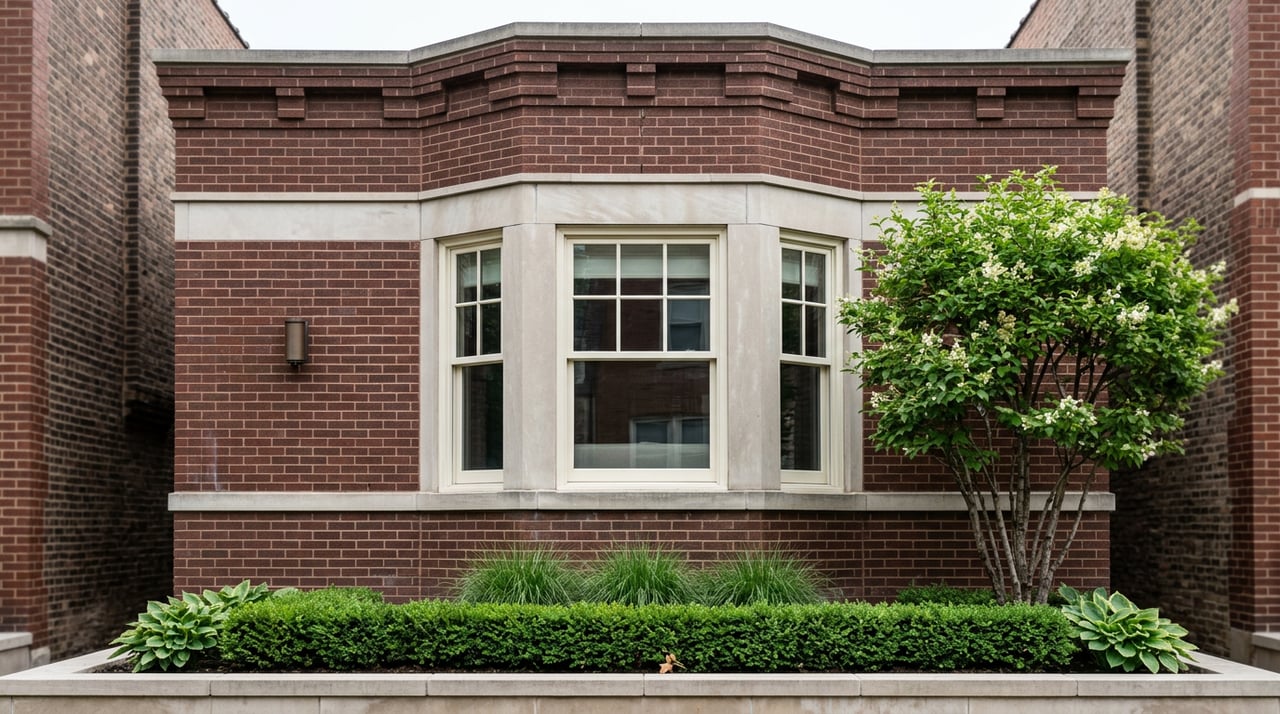
West Lakeview's stock looks different by design. Two-flats, single-family homes, and low-rise condo buildings dominate the blocks between Ashland and the Southport Corridor, with far lighter assessment structures and, in many cases, no HOA at all. That's a structurally different product being sold, and it's priced accordingly. Buyers comparing a listing in each pocket aren't just comparing square footage. They're comparing two different ownership models, one bundled and building-managed, one standalone.
Here's the piece that doesn't show up in a portal search. Southport's retail vacancy rate held at 0 percent between 2023 and 2024, according to a Stone Real Estate survey, before ticking up slightly to roughly 1.6 percent in 2025. That uptick wasn't demand cooling. It traced to specific, one-off vacancies: Claire's national bankruptcy-related closures and a UPS Store relocating to a larger space nearby. Everywhere else along the corridor, national retailers kept arriving. As of 2025, national chains occupy roughly two-thirds of Southport's storefronts, up from a corridor still dominated by independent shops back in 2012.
CBRE's 2026 Chicago market outlook backs this up at the citywide level, naming Southport and Armitage alongside the Gold Coast and Fulton Market as submarkets where a "notable lack of availability" will keep driving rents higher through 2026, in part because so little new retail space is being built to replace what disappears. When a retail corridor can't expand, the residential blocks that sit inside walking distance of it become the scarce good instead. That's the mechanism showing up in West Lakeview's price per square foot.
The corridor's recent activity reads like a checklist of what a retail street looks like when demand outruns supply. Reformation opened at 3452 N. Southport, taking over the former Dr. Martens storefront. Colectivo Coffee reopened this summer after a structural rebuild. STRONG Pilates launched its first neighborhood studio on June 6. HYOU Fine Jewelry and the boutique Bobbles & Lace both signed on for storefronts near Cornelia, and Foxtrot Market announced its return to the neighborhood at 917 W. Belmont. Longtime anchors like Crosby's Kitchen, D'Agostino's, and Coda di Volpe are still drawing traffic, joined more recently by Sweetgreen and Boka's trio of GG's Chicken Shop, Little Goat Diner, and Itoko in the old Southport Lanes space.
The clearest evidence of the squeeze is under construction right now. At 3600 N. Southport, developer Derrig Management is replacing a long-vacant drive-thru bank and its parking lot with a four-story building carrying 6,250 square feet of ground-floor retail, divisible into as many as three storefronts, beneath 10 residential units. Designed by local firm Jonathan Splitt Architects, the roughly $6 million project is expected to deliver in the second quarter of 2027, with retail leasing already underway according to Chicago YIMBY's coverage of the renderings. Leasing materials name Lululemon, Vuori, Anthropologie, Free People, Sephora, and Arc'teryx as existing neighbors, which tells you what kind of tenant the developer expects to fill that space. Even at full capacity, that's a small addition against a corridor that's run at or near zero vacancy for two straight years. It won't meaningfully loosen anything.
None of this makes East Lakeview a bad buy. It remains the more accessible entry point in the neighborhood, with high-rise condos still transacting well below West Lakeview's price floor, and it keeps its own genuine draw in direct proximity to Belmont Harbor and the Lakefront Trail. For a buyer prioritizing budget, building amenities, and lakefront access over retail walkability, that tradeoff still makes sense.
But a buyer choosing West Lakeview for its two-flats and single-family stock should walk in understanding what they're actually competing for. It isn't more square footage for the money. It's a smaller, faster-moving slice of inventory pricing in access to a retail corridor that structurally cannot grow. That's worth knowing before you assume a lower asking price signals room to negotiate, because in this pocket, speed matters more than leverage. If you're timing an offer here, our guide to competing for a Lake View condo in a fast market walks through the specifics of moving quickly without overpaying.
Does the median price drop mean West Lakeview is getting more affordable? No. The median fell because the mix of what sold shifted toward smaller properties, not because value declined. Price per square foot, the more reliable measure of what a given property costs, rose nearly 24 percent over the same window.
Will the 3600 N. Southport project ease the retail squeeze? Unlikely to matter much. Even with three new storefronts, it's a small addition to a corridor that held zero vacancy for two consecutive years before ticking up slightly due to a couple of unrelated closures.
Is East Lakeview still worth considering for a first purchase? Yes, particularly for buyers prioritizing a lower entry price and lakefront access over low-rise character. Just factor the building's monthly assessment into your real monthly cost before comparing it against a West Lakeview listing on price alone.
If you're weighing which side of Lake View actually fits your budget and your plans, Lissa Weinstein works both pockets of this neighborhood closely enough to walk you through the tradeoff block by block. Request a confidential consultation to talk through what your number actually buys on each side of Ashland, or start with a current home valuation if you're the one deciding whether to sell into this market.

Whether buying or selling or looking for an expert team to downsize your parents, my team of professionals is here to support your goals and make your next home move as smooth as possible. We are here to guide you, help you make smart investments for your future, transition your move, and take care of all of the details so you don’t have to. We are excited to get to know you and see how we can best be of service.
Let’s start working together!