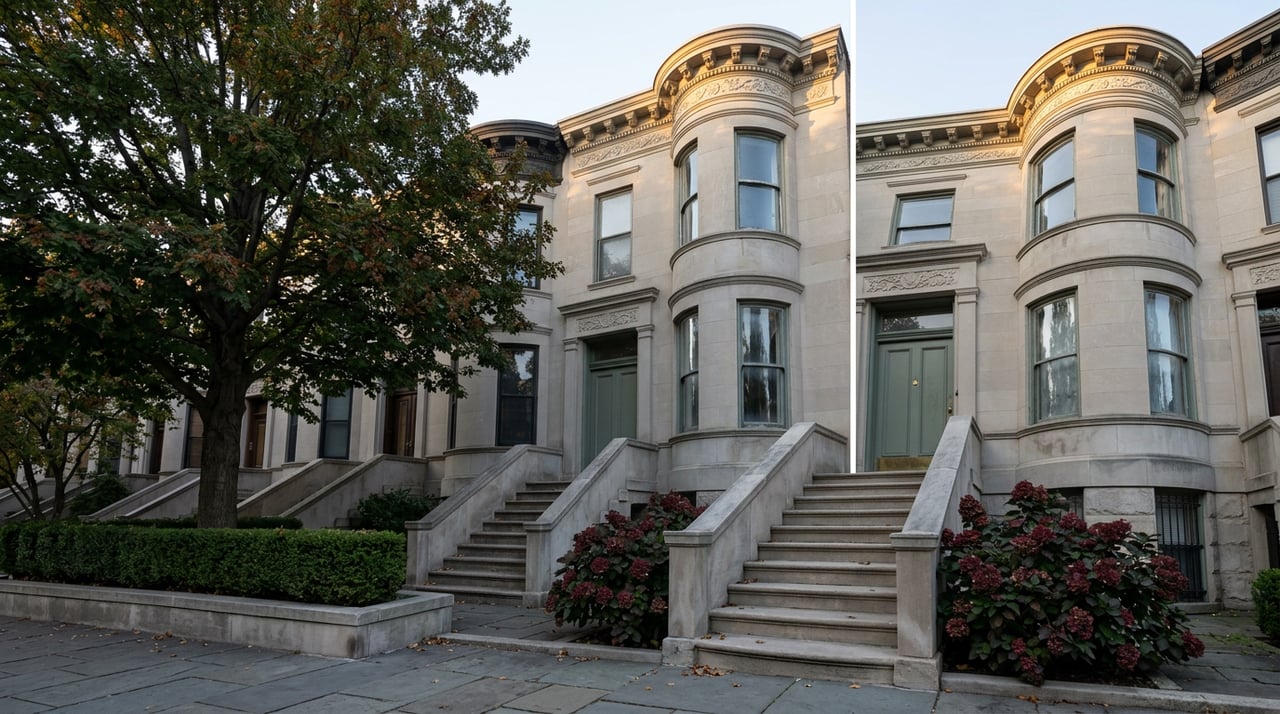
Marathon Sunday in Lincoln Park: Why the Course Comes Back Around
Every October, the same assumption circulates through Lincoln Park in the week before the Chicago Marathon: a couple of streets close for a few hours, the runners go by once, and by early afternoon everything is back to normal. That assumption is only half right. The Bank of America Chicago Marathon does not pass through Lincoln Park once on Sunday, October 11, 2026. It crosses the neighborhood twice, on two different sets of streets, in two different windows of the morning. Knowing which pass affects your block, and when, is the difference between a clean day and getting boxed in on your own street for longer than you planned.
This is the 48th running of the race, and organizers are expecting more than 55,000 registered runners, which would make it the largest field in the event's history. That volume matters for residents mostly because of how long the course stays occupied. Waves start at 7:30 a.m. Central time and keep launching until 8:35 a.m., which means runners keep moving through any given stretch of the course for hours, not minutes.
The Lincoln Park Chamber of Commerce publishes its own street-by-street closure advisory each year, and it lists the neighborhood's course footprint as two separate groups of streets rather than one continuous stretch. That structure is the clearest evidence that the race touches Lincoln Park at two distinct points along its 26.2 miles.
| Pass | Streets Closed | What's Happening There |
|---|---|---|
| First, earlier in the morning | Stockton Dr. from LaSalle Dr. to Fullerton Dr., Fullerton Dr. from Stockton to Cannon Dr., Cannon Dr. from Fullerton to Sheridan Rd., Sheridan Rd. from Diversey Pkwy. to Belmont Ave. | The course hugs the park's interior drives and the lakefront side, passing close to Lincoln Park Zoo. This is also where the Bank of America Shamrock Shuffle Cheer Zone sits, at the race's 8K mark. |
| Second, later in the morning | Clark St. from Diversey Pkwy. to Webster Ave., Webster Ave. from Clark to Sedgwick St., Sedgwick St. from Webster to North Ave., North Ave. from Sedgwick to Wells St. | The course cuts back through the neighborhood's western edge, closer to the retail blocks, before crossing into Old Town near North and Wells. |
If you live between the lakefront drives and Clark Street, this is the detail that actually matters: you are not on one closed street for a few hours, you are between two closed perimeters for most of the morning. A resident on Orchard or Fremont, for instance, could find both their eastern and western routes out of the neighborhood blocked at overlapping times, even though neither street is technically part of the marathon course.
The good news is that the boundary is precise and publicly posted. The Chicago Marathon's own course notice for 2026 confirms that Clark Street north of Diversey Parkway stays open the entire day. That single fact tells you exactly where the closed segment ends. If you can get to Clark and Diversey, you're out.
Citywide, the marathon's official closure window runs from 6 a.m. to 4 p.m. on race day, with towing enforcement on the course and posted no-parking zones starting at 1 a.m. That's the outer boundary organizers give for the entire 26.2-mile route, not a promise about any one neighborhood.
Locally, the pattern has been tighter. In recent years, the Lincoln Park Chamber has told residents to expect most streets in the neighborhood open again by around 1:30 p.m., well ahead of the citywide 4 p.m. mark. The chamber typically republishes its confirmed street list a few weeks ahead of race day, so it's worth checking their site again closer to October 11 for anything that shifts. But the shape of the closure, which streets, in what order, has held steady because the marathon runs the same certified course every year. That consistency is also why the race qualifies as a record-eligible course on the World Marathon Majors circuit.
One more date to note: the Abbott Chicago 5K runs the day before, on Saturday, October 10, with its own separate downtown closures. If your weekend plans involve driving through the Loop on Saturday as well as Sunday, both days carry some disruption, not just race day itself.
Driving across the closed perimeter isn't realistic between roughly 6 a.m. and early afternoon. The CTA is the more reliable option. The Brown Line stop at Sedgwick puts you within about a fifteen-minute walk of the Shamrock Shuffle Cheer Zone, and it sits close enough to the second-pass streets that you can reposition on foot as the morning goes on.
If you need to leave the immediate area rather than watch the race, Clark Street north of Diversey Parkway is your reliable route out, since it stays open for the full day per the marathon's own advisory. That's a useful fact to keep in your back pocket regardless of which side of the closure your address falls on.
The Shamrock Shuffle Cheer Zone at the 8K mark, roughly Mile 5, sits right at the edge of Lincoln Park and Old Town, and it's an official gathering point rather than an informal one. The tradition is to wear green, a nod to the Shamrock Shuffle race that kicks off Chicago's outdoor running season each March. Organizers ask spectators to leave the confetti cannons at home this year, citing both the noise and the cleanup, and to bring cowbells or hand clappers instead.
Because this stretch runs close to Lincoln Park Zoo and the South Pond boardwalk, it doubles as a reasonable plan for a family morning even if nobody in your group is running. The zoo is free and open on race day, and the loop around South Pond gives you somewhere to walk off the wait between waves without losing your spot near the course. If you're looking for something to eat before or after, Lincoln Park's restaurant scene has plenty of options that will already be open for the morning crowd.
The short version: don't plan your morning around a single closure. Plan it around two. The first pass, closer to the zoo and the lakefront drives, will draw the bigger crowd and the more festive atmosphere. The second pass, cutting through Clark, Webster, Sedgwick, and North, will feel quieter but will also be the one that catches residents off guard if they assumed the course only touched their neighborhood once. Between the two, expect several hours where getting from one side of the park to the other on foot or by car simply isn't practical, no matter how the individual street signs read.
None of this is a reason to leave town for the day. It's a reason to know the map before you need it.
Whether you're watching from a folding chair on Cannon Drive or just trying to get your car out before the tow trucks start their morning, Lincoln Park on marathon Sunday rewards the people who checked the details ahead of time. That's true of most things in this neighborhood, from a Sunday morning street closure to a decision as large as your next move. If you ever want to talk through what's happening in Lincoln Park beyond race day, from the private conversations around a future sale to what a particular block is really worth right now, Lissa Weinstein has spent two decades paying attention to exactly this kind of detail. Reach out anytime for a confidential conversation.

Whether buying or selling or looking for an expert team to downsize your parents, my team of professionals is here to support your goals and make your next home move as smooth as possible. We are here to guide you, help you make smart investments for your future, transition your move, and take care of all of the details so you don’t have to. We are excited to get to know you and see how we can best be of service.
Let’s start working together!